01 Dealer’s notes
A QUIETER SIDE OF ’90s SEIKO
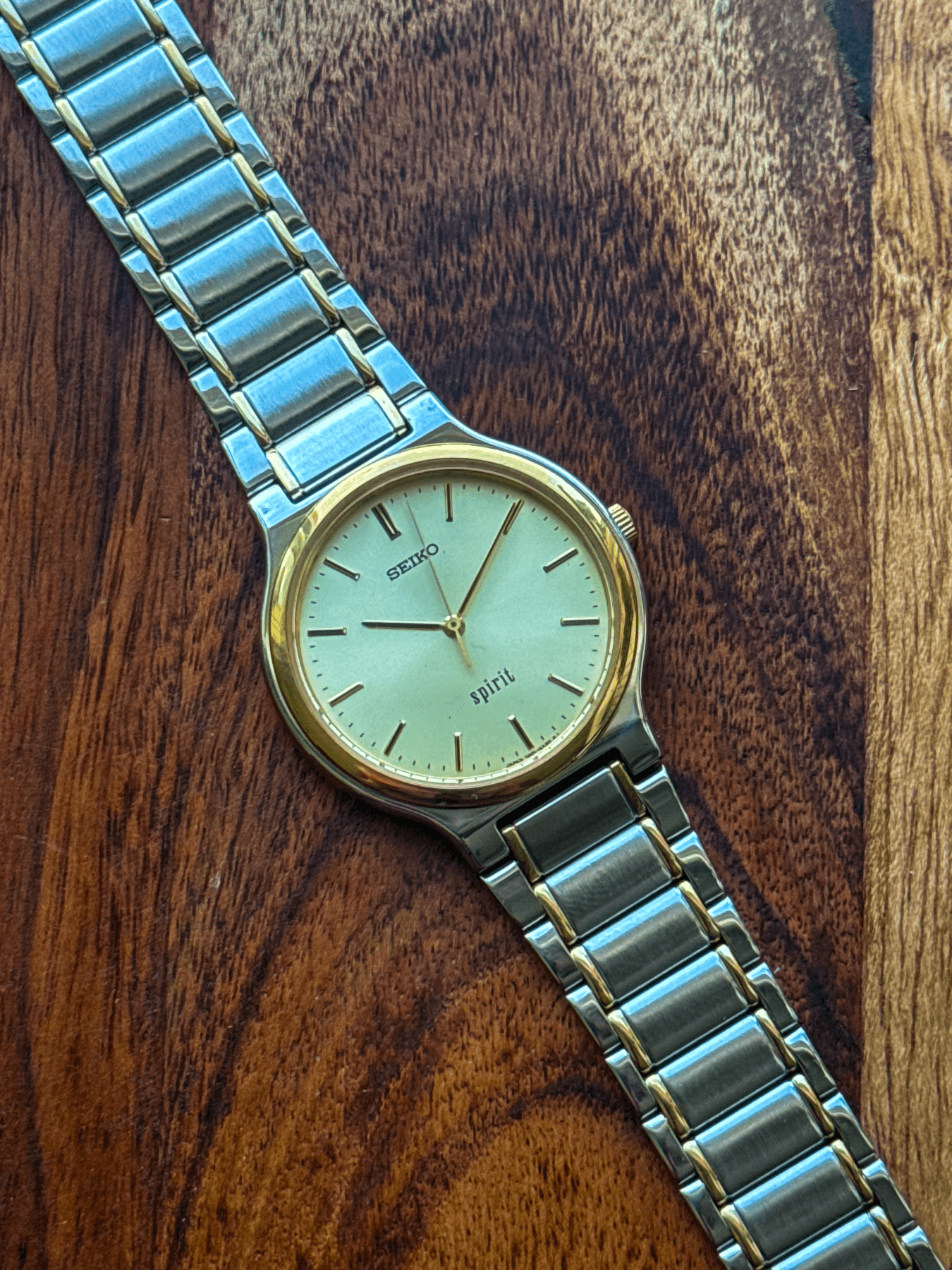
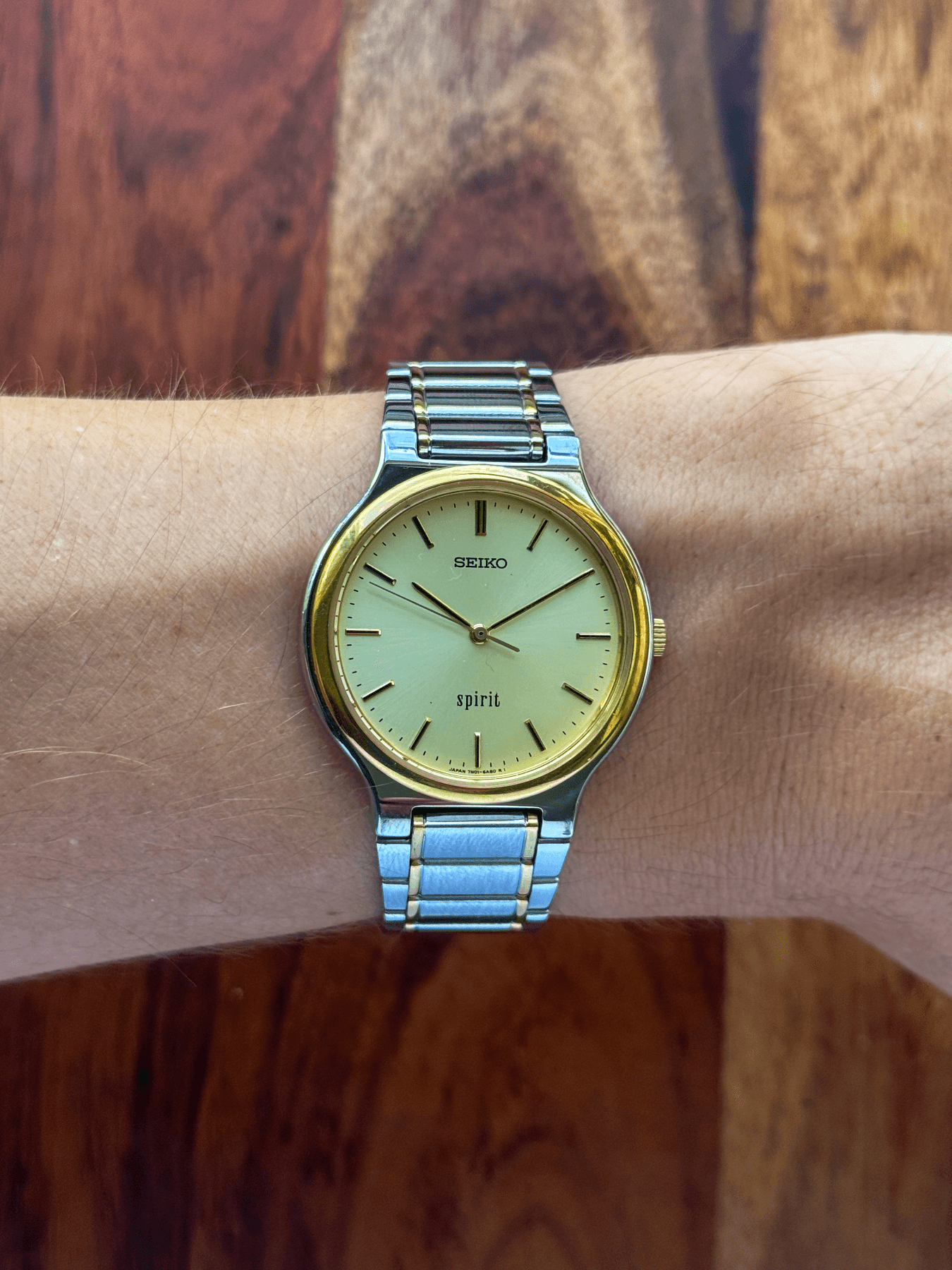
Produced in November 1996, this Seiko Quartz 7N32-0150 comes from a period when some of the brand’s most interesting watches were also its least complicated. Rather than leaning into the technical aesthetic of Seiko’s divers and chronographs, this model is built around simplicity: a compact case, highly legible dial and dependable Japanese quartz movement. The serial 6N2283 points to November of a year ending in six, and documented examples of this exact reference from 1996 strongly support the date.
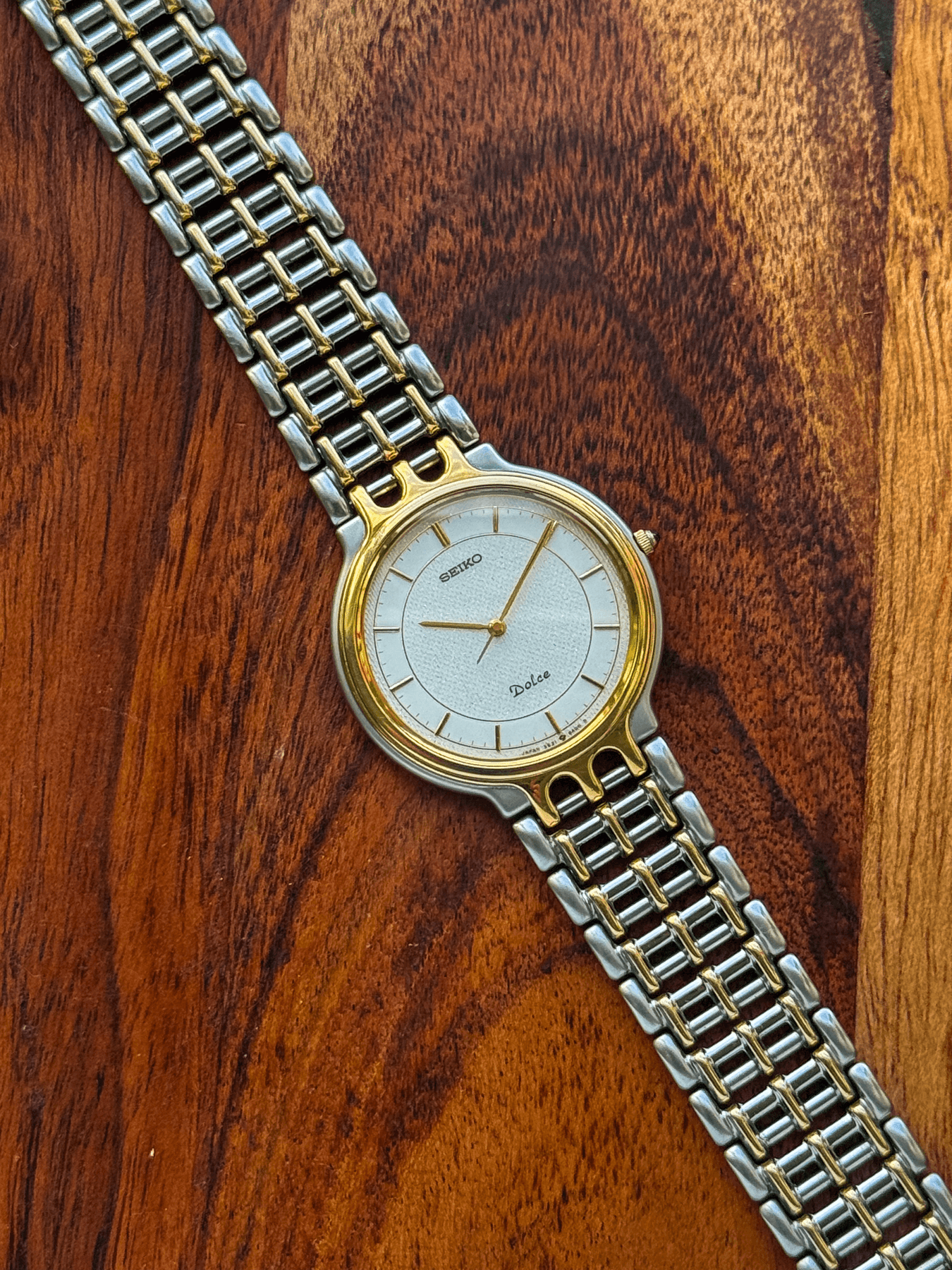
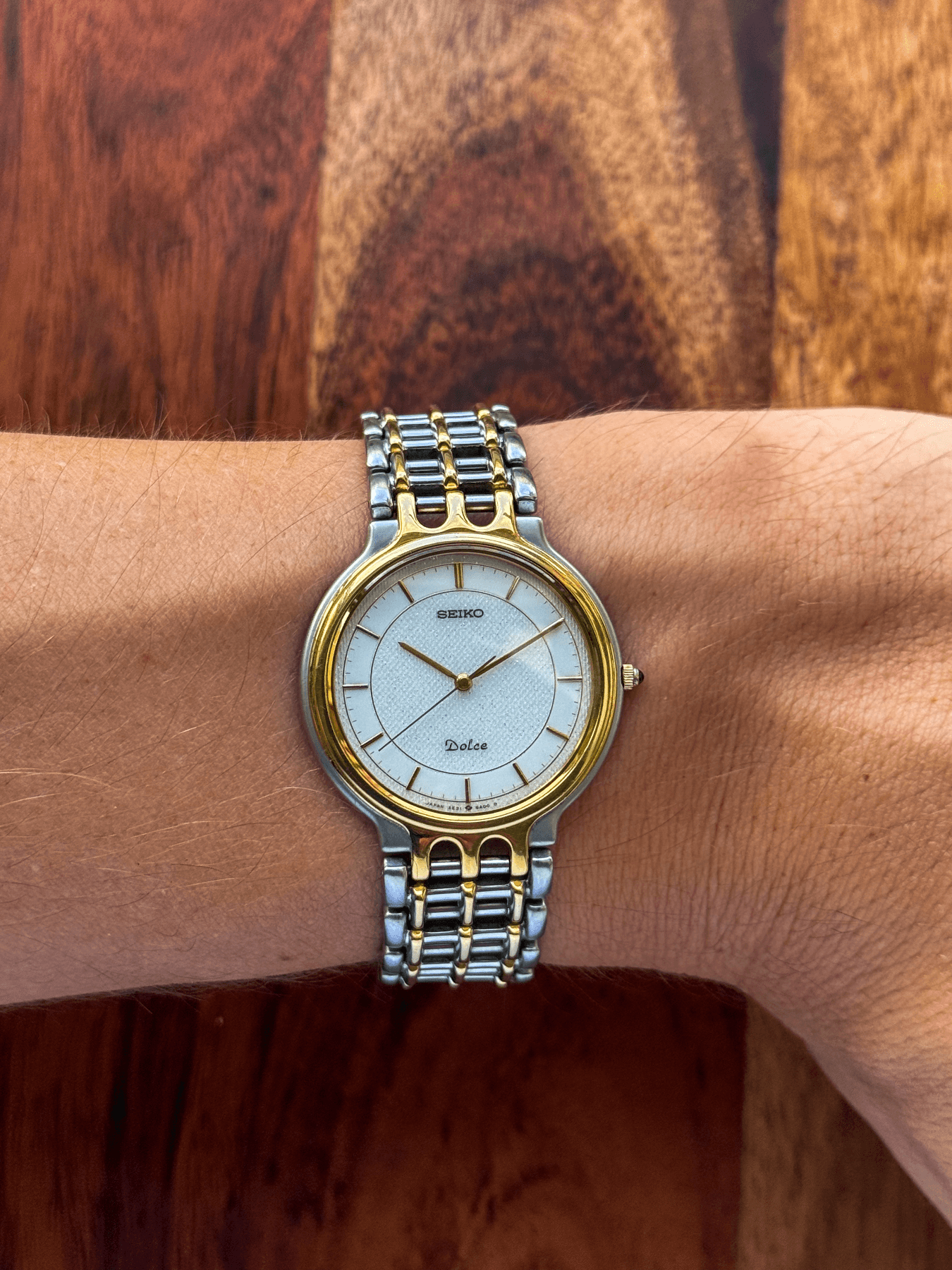
The design is unusually distinctive for such a straightforward watch. A clean white dial is printed with oversized black Arabic numerals, interrupted only by the framed date window at three and a restrained SEIKO signature beneath twelve. Around it sits a thin gold-tone bezel secured visually by small exposed accents around its perimeter, giving the otherwise simple watch a slightly more architectural character. The case is approximately 35mm, placing it firmly within the compact proportions typical of Japanese dress and everyday watches of the period.
Inside is Seiko’s 7N32 quartz caliber, a three-hand, date-equipped movement built around the same practical philosophy as the watch itself. The caliber runs at the standard quartz frequency of 32,768 Hz and is specified to approximately ±15 seconds per month, with a 371 / SR920SW battery. The caseback carries the full 7N32-0150 caliber-case designation alongside MADE IN JAPAN, while Seiko’s parts documentation also confirms the 7N32-0150 as a distinct factory case configuration with several corresponding dial and bracelet variants.
What makes this example work particularly well is the contrast between its formal details and everyday construction. The gold-tone bezel and framed date aperture give it the appearance of a dress watch, while the intricate multi-link steel bracelet and broad, softly sculpted case make it feel considerably more casual on the wrist. There is visible age and wear to the gold-tone finish, particularly around the bezel, but the white dial remains remarkably clean. It is the kind of lesser-known Seiko that captures the character of the 1990s particularly well—not an icon or a collector shorthand reference, but a thoughtfully designed Japanese watch that has become more interesting with time.
Three points to note.
November 1996 production, based on serial 6N2283 and documented examples of the same reference from 1996.
Seiko 7N32 quartz caliber, with date display and approximately ±15 seconds-per-month accuracy.
White Arabic dial / gold-tone bezel configuration, housed in the compact 7N32-0150 case at approximately 35mm.